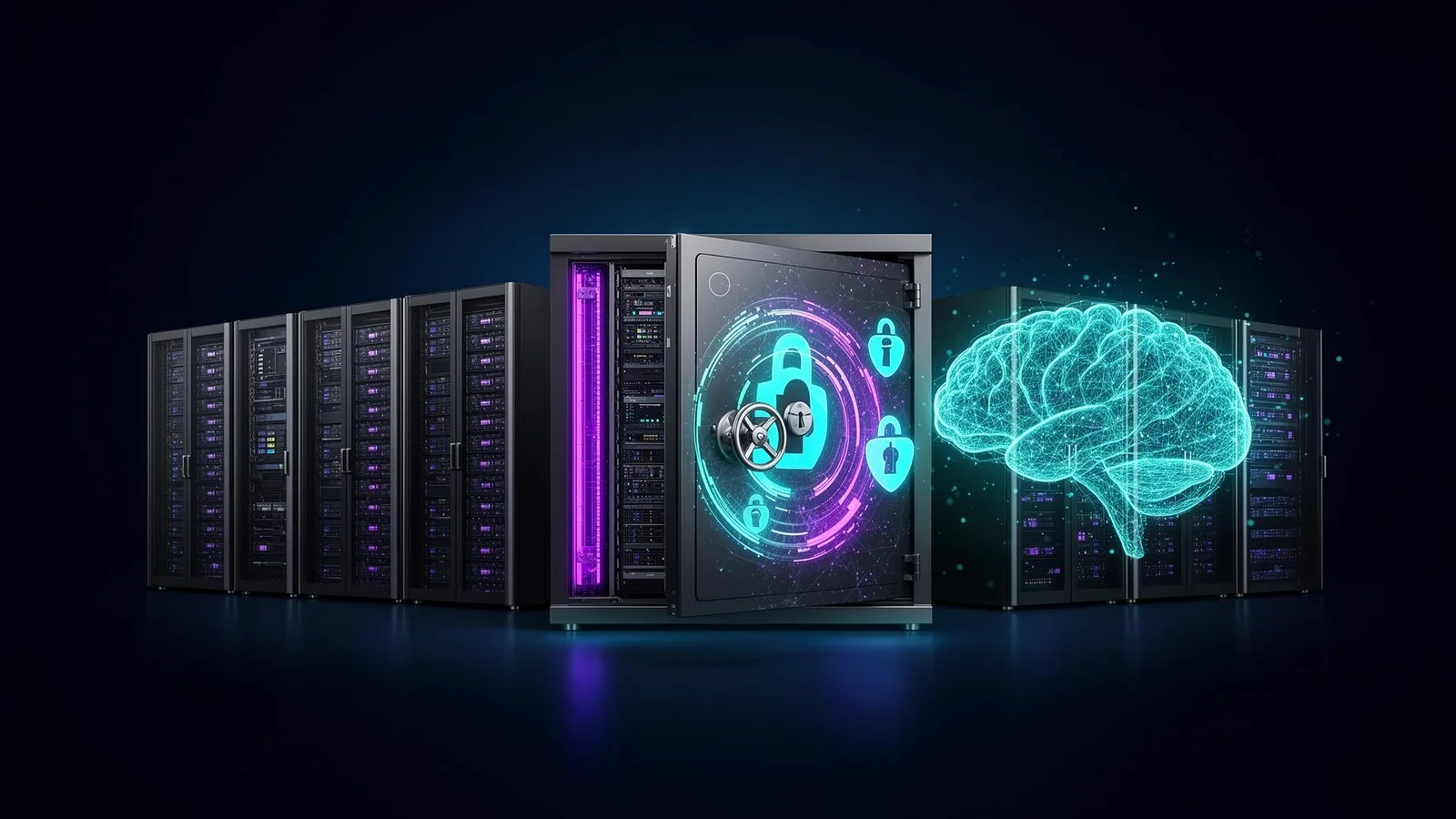
Begin with the data boundary
On-premises private AI is a discussion about where enterprise information is processed and who controls the operating environment. Before choosing infrastructure, identify the documents and data the AI will use, the users who need access and the actions the system may perform. Nulink's private AI positioning connects on-premises deployment with full data ownership. Use those requirements to frame the architecture conversation from the beginning.
Enterprise Architecture & Modernisation
We design future-state architectures that eliminate technical debt and enable agility.
Cloud & Hybrid Strategy: Secure landing zones (Azure/AWS/Private) tailored for data residency requirements.
Legacy Modernisation: Decoupling monolithic core systems (e.g., banking workflows) into agile, microservices-ready platforms.
Infrastructure Resilience: Designing high-availability networks and disaster recovery plans aligned with business continuity goals.
Private AI & Data Sovereignty
Adopting AI in regulated industries requires more than just access to models—it demands control. Nulink specialises in Private AI implementations that keep sensitive data within your governance perimeter.
On-Premises & Hybrid AI: Deploying LLM capabilities (via Metis ARX or similar) inside your firewall to ensure zero data leakage.
Data Governance: Establishing clear data classification and access controls before AI adoption to meet strict compliance/audit standards.
The Core Promise: Absolute Data Sovereignty
Public AI clouds are a compliance nightmare for banks and government agencies. Metis ARX is the answer. It is not just software; it is a hardened physical or virtual appliance designed for 'Zero Trust' environments. Unlike cloud-based models that require sending sensitive data to external API endpoints, Metis ARX operates entirely within your firewall.
Your AI, Your Perimeter
Air-Gapped Operation: Metis ARX can run without any internet connection. It comes pre-loaded with state-of-the-art models that run locally. No 'Training on Your Data': When you use public clouds, you risk your data being used to train future models. With Metis ARX, your prompt engineering, RAG (Retrieval-Augmented Generation) vector stores, and fine-tuning datasets remain your exclusive intellectual property. Audit-Proof Architecture: Every prompt, every token generated, and every data access log is stored locally on immutable logs. This satisfies the strictest requirements of HKMA, SFC, and ISO 27001 auditors who demand full traceability of AI decision-making.
Enterprise-Grade Hardware Performance
Metis ARX is a powerhouse built for heavy enterprise workloads. Powered by high-performance GPU infrastructure, Metis ARX delivers low-latency inference speeds required for real-time banking transactions or emergency response systems. Scalable GPU Orchestration: Whether you need to process 1,000 documents an hour or 1 million, Metis ARX scales horizontally. Add more nodes to your private cluster, and the Metis Orchestrator automatically balances the load. Hybrid Compute Options: Deploy as a software layer on your existing enterprise servers or as a dedicated, pre-configured hardware appliance delivered to your rack.
Separate the deployment questions
Discuss the model, the infrastructure, the knowledge sources and the security layer as connected but distinct parts of the solution. An enterprise may need to consider existing servers, a dedicated appliance or a private cluster alongside integration with business applications. The important question is how these parts work within your governance perimeter. Record which operational dependencies are acceptable and which information must remain inside the organisation.
Plan knowledge access and traceability
Private AI can connect internal documents with retrieval-augmented generation, but the usefulness of the answer depends on the information made available to it. Ask how documents are organised, how user access is respected and how references can be traced back to source material. Consider prompts, retrieved content, generated responses and access logs together. Your internal team should know how to review the system's behaviour and manage its knowledge sources.
Evaluate AI-specific protection
Traditional network protection and AI-specific guardrails address different concerns. Nulink's existing Metis Garrison content covers prompt protection, data loss prevention, context-aware filtering and continuous monitoring. Ask how these controls connect with the private AI environment and its users. Make the responsibilities for reviewing blocked requests, redacted information and unexpected responses explicit. Keep the security discussion connected to the intended business workflow.
Prepare an operational review
Bring an example document workflow, the expected users and the data handling constraints to the first discussion. Ask how the solution integrates with existing systems, how it is monitored and who can stop or change the model when necessary. Review governance and ongoing infrastructure management alongside the initial deployment. Contact Nulink to discuss on-premises private AI, secure enterprise integration and the Metis suite in the context of your organisation's requirements.
Questions to resolve before implementation
Turn the assessment into a written working brief. Describe the current process in enough detail that business and technical teams can recognise the same problem. Include its inputs, decisions, exceptions and outputs, and identify the information that should not leave the organisation. Record which existing systems and operational arrangements must remain unchanged. This gives the discussion a shared reference and helps separate a necessary capability from a preferred implementation method.
Use one representative scenario to review the proposal end to end. Ask what the user sees, what the connected systems do, where approvals are required and how the team investigates an unexpected result. Include an exception, not just the ideal path. Discuss the documentation and knowledge that will be available to your staff. Agree which responsibilities remain internal and which belong to the delivery or managed service team, including how a change is requested and reviewed.
Finally, identify the decisions that are still open. Do not treat an assumption about access, integration or support as an agreed requirement. Bring the relevant business owners into the conversation alongside IT, and ask the proposed partner to distinguish the initial assessment from implementation and ongoing operations. A clear scope makes it easier to compare options without losing sight of the business workflow that prompted the project.